Module 1: Multicloud Architecture Foundations
Defining Multicloud Architecture
-
What is multicloud and why it matters
-
Key drivers for multicloud adoption (compliance, resilience, cost)
-
Common multicloud use cases and patterns
Benefits and Challenges
-
Avoiding vendor lock-in
-
High availability and disaster recovery
-
Managing complexity (networking, identity, security)
Multicloud Design Considerations
-
Standardization vs. cloud-specific optimizations
-
Interoperability and workload portability
-
Designing for latency, performance, and redundancy
-
Integration of SLAs across cloud providers
Key Architectural Patterns
-
Active-active and active-passive architectures
-
Hybrid cloud vs. multicloud strategies
-
Managing stateful vs. stateless workloads
Module 2: Identity, Security & Access Control Across Clouds
Multicloud Identity Management
-
Identity federation (SAML, OIDC, SCIM)
-
Cross-cloud identity integration (Azure AD vs. AWS IAM)
-
Single Sign-On (SSO) and multi-factor authentication (MFA)
Role-Based Access Control (RBAC) & Policies
-
IAM roles, policies, and permissions
-
Azure RBAC vs. AWS IAM policies
-
Principle of least privilege (PoLP) implementation
Cross-Cloud Security Challenges
-
Managing secrets and credentials (AWS Secrets Manager vs. Azure Key Vault)
-
Zero Trust security model for multicloud
-
Logging and auditing (AWS CloudTrail vs. Azure Monitor)
Module 3: Networking & Interconnectivity for Multicloud
Networking Basics in AWS & Azure
-
VPC (AWS) vs. VNet (Azure)
-
CIDR block planning and IP address management
Cross-Cloud Connectivity Strategies
-
Site-to-site VPNs (AWS Site-to-Site VPN vs. Azure VPN Gateway)
-
Dedicated interconnect (AWS Direct Connect vs. Azure ExpressRoute)
-
SD-WAN and third-party solutions
Traffic Management & Load Balancing
-
AWS Elastic Load Balancer vs. Azure Load Balancer
-
Global load balancing (AWS Global Accelerator vs. Azure Front Door)
-
Traffic steering between clouds using DNS (Route 53 vs. Azure Traffic Manager)
Security & Performance Considerations
-
End-to-end encryption (TLS, IPSec)
-
Latency optimization and bandwidth management
-
DDoS protection strategies across clouds
Module 4: Compute & Container Orchestration Across AWS & Azure
Compute Services Overview
-
EC2 vs. Azure Virtual Machines
-
Serverless options (AWS Lambda vs. Azure Functions)
-
Auto-scaling strategies in both clouds
Containerization and Kubernetes
-
AWS EKS vs. Azure AKS
-
Running multi-cloud Kubernetes clusters
-
Service mesh for cross-cloud communication (Istio, Linkerd)
Hybrid and Edge Computing
-
AWS Outposts vs. Azure Stack
-
Running workloads at the edge (AWS Wavelength, Azure Edge Zones)
Optimizing Compute for Cost & Performance
-
Spot Instances vs. Azure Spot VMs
-
Compute Savings Plans and Reserved Instances
Module 5: Data & Storage Management in a Multicloud Setup
Cloud Storage Options
-
AWS S3 vs. Azure Blob Storage
-
Block storage (EBS vs. Azure Managed Disks)
-
File storage solutions (Amazon FSx vs. Azure Files)
Cross-Cloud Data Replication
-
AWS DataSync vs. Azure Data Box
-
Ensuring data consistency (eventual vs. strong consistency)
-
Backup and disaster recovery solutions
Database Strategies
-
Managed databases (AWS RDS vs. Azure SQL Database)
-
NoSQL options (DynamoDB vs. CosmosDB)
-
Cross-cloud database replication and failover
Data Security & Compliance
-
Encryption at rest and in transit
-
Cross-region data governance and sovereignty considerations
Module 6: Observability & Monitoring Across Clouds
Monitoring Tools & Services
-
AWS CloudWatch vs. Azure Monitor
-
Distributed tracing tools (AWS X-Ray vs. Azure Application Insights)
Log Aggregation & Analysis
-
Centralized logging strategies (AWS OpenSearch vs. Azure Log Analytics)
-
Cross-cloud SIEM solutions (AWS Security Hub, Microsoft Sentinel)
Real-Time Alerts & Incident Management
-
Setting up alerts and notifications across clouds
-
Integrating with third-party observability platforms (Datadog, Splunk, Prometheus)
Multicloud Performance Optimization
-
Synthetic monitoring and real-user monitoring (RUM)
-
Latency troubleshooting and mitigation
Module 7: Infrastructure as Code & CI/CD for Multicloud
Infrastructure as Code (IaC) Overview
-
AWS CloudFormation vs. Azure Resource Manager
-
Using Terraform for cloud-agnostic deployments
CI/CD Pipelines for Multicloud
-
AWS CodePipeline vs. Azure DevOps
-
GitHub Actions for multicloud automation
-
Containerized deployments with AWS CodeBuild & Azure Pipelines
Automation & Configuration Management
-
Ansible, Chef, and Puppet for cross-cloud configurations
-
Policy as Code for security and compliance (AWS Config vs. Azure Policy)
Best Practices for Multicloud DevOps
-
Managing state and secrets in pipelines
-
Blue-green and canary deployments across clouds
Module 8: Cost Optimisation & FinOps for Multicloud
Understanding Cloud Costs
-
AWS Cost Explorer vs. Azure Cost Management
-
Multicloud billing challenges and hidden costs
FinOps Framework for Multicloud
-
Tagging and cost allocation best practices
-
Optimizing reserved instances and savings plans
Rightsizing & Optimization Techniques
-
Automated instance rightsizing tools
-
Storage tiering strategies to reduce costs
Cost Visibility & Reporting
-
Cross-cloud cost dashboards and third-party tools (CloudHealth, Apptio)
-
Building a cost-aware engineering culture
Exams and assessments
There is no specific exam or certification associated with this course.
Hands-on learning
This course includes the following practical labs:
-
Multicloud Networking: Securely Connecting Virtual Networks in AWS and Azure
-
Compute & Serverless Resource Orchestration in Azure
-
Multicloud Observability: Single Pane of Glass for AWS and Azure
-
Multi-Cloud Infrastructure as Code with Terraform and Ansible
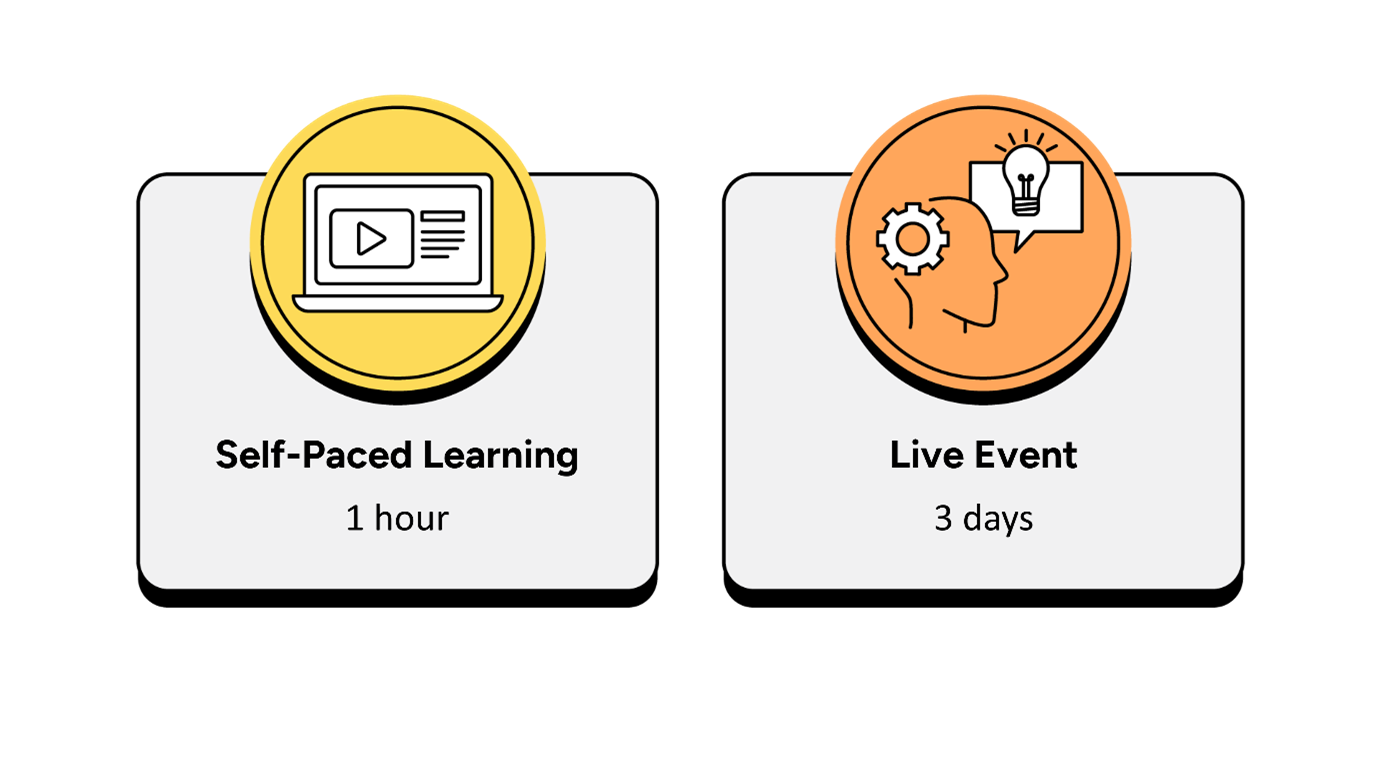
Self-paced learning
-
Up to 1 hour, completed over a 2-week period prior to the live event.
-
It is recommended that the self-paced learning is completed prior to joining the live event.
-
It is recommended that learners have a minimum of 2 weeks between the course booking and the instructor-led live event to complete the necessary hours of learning.
-
The self-paced learning is available 2 weeks prior to the live event and for 12 months following the live event.
Instructor-led live event
-
This course has a 2-day live event.